
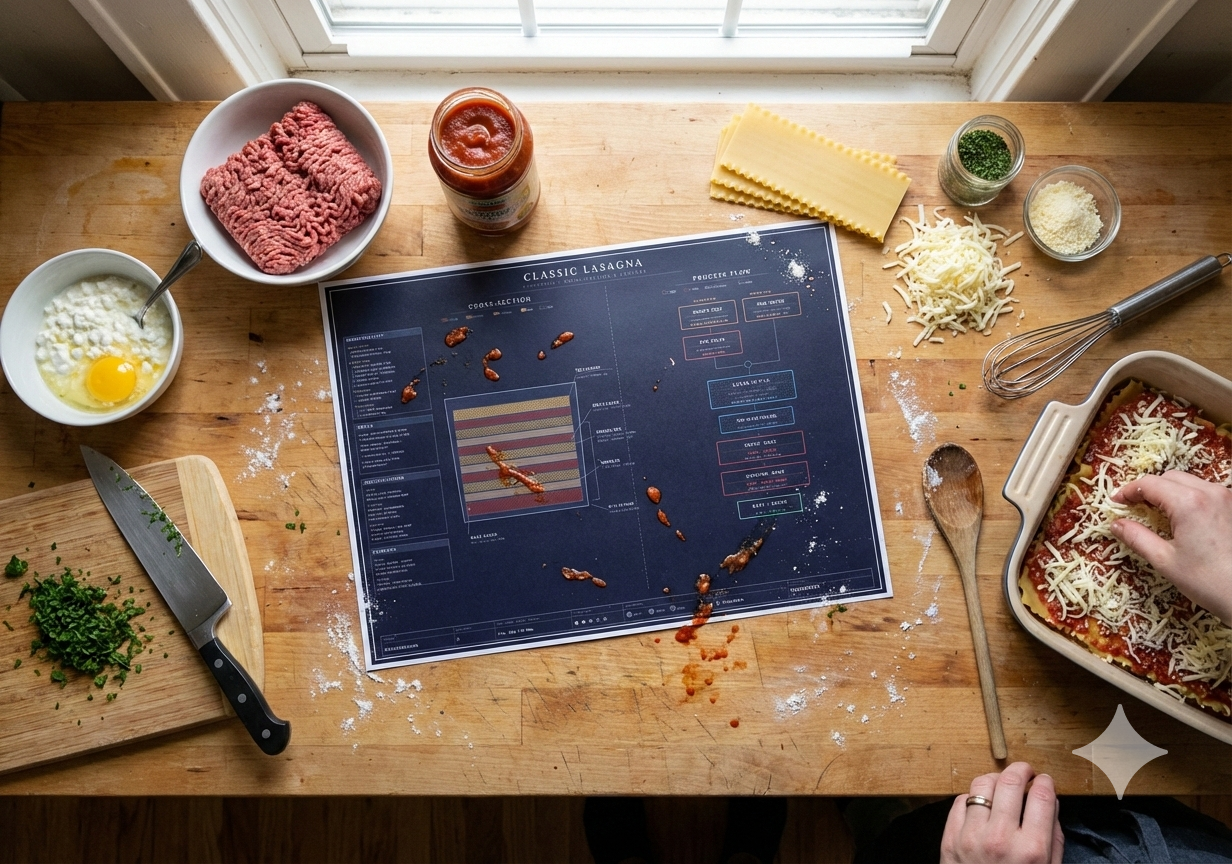
My wife keeps finding new recipes.
I don’t know where she finds them. Some blog I’ve never heard of, with a 2,000-word preamble about the author’s grandmother’s garden or cat, seventeen ads, and a recipe card wedged at the bottom that you have to screenshot because your phone screen turns off every time you step away to stir something. Or it’s paywalled and I have to spend 5 minutes resetting my NYT login.
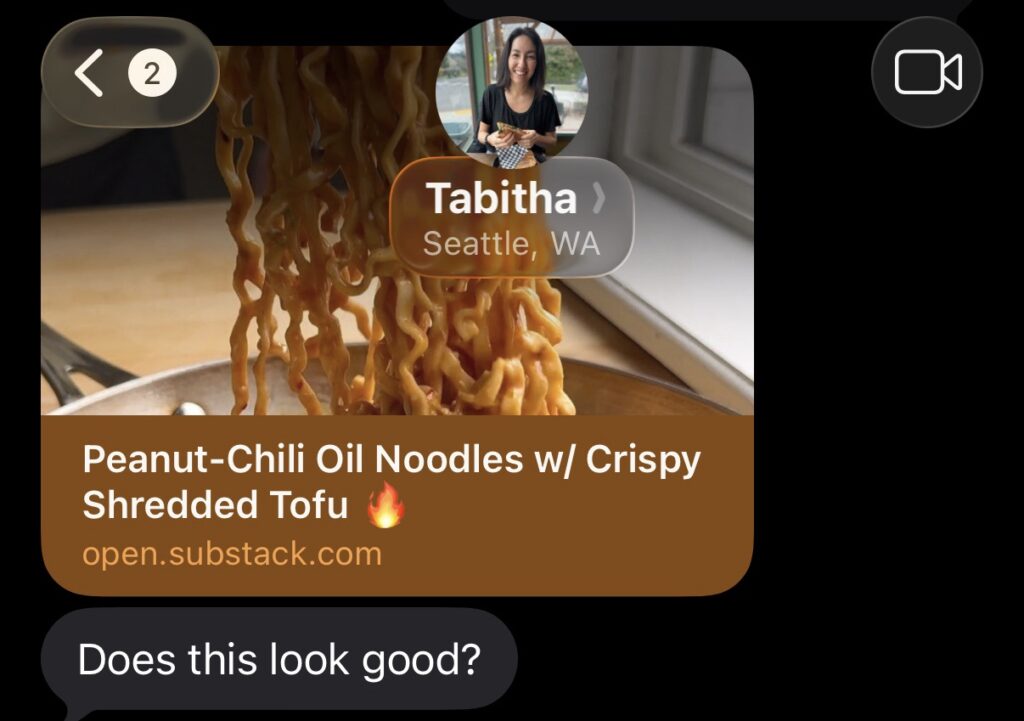
She sends me the link. The recipe sounds amazing. And I feel a mild, familiar terror — because I’ve never made something like that before, and I’m about to spend 90 minutes decoding someone else’s stream-of-consciousness instructions while trying not to screw up something allegedly simple.
Just kidding, I just never open the link due to past… trauma.
The thing that finally broke me was lasagna. Every single lasagna recipe describes the layering order differently, and somehow all of them are ambiguous. “Spread a layer of sauce, then noodles, then cheese mixture, then repeat.” OK, how much sauce? Which cheese mixture, the ricotta one or the top one? How many times is “repeat”? Am I supposed to just know? Even the so-called “Easy Lasagna” recipe fell into this trap!

So I asked Claude to make me a diagram. Just a simple mermaid chart of the process flow. And it helped! The lasagna turned out delicious (everyone assured me).
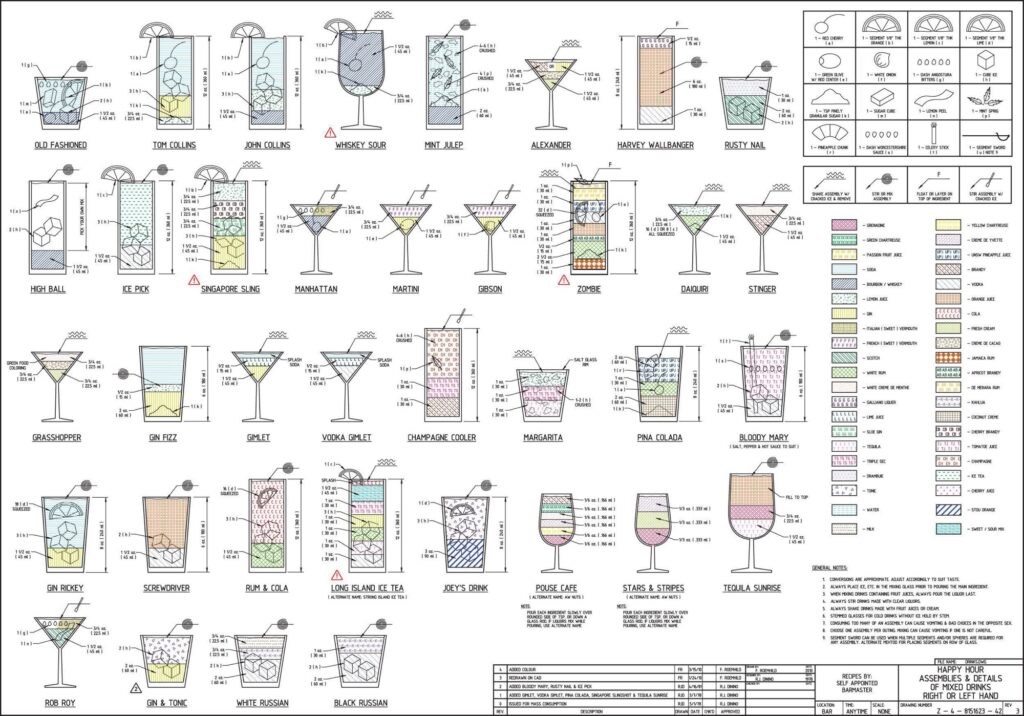
But then I remembered this cocktail engineering drawing I’d seen years ago back in college, the one that lays out 30+ drinks as dimensioned cross-sections with hatching patterns for each ingredient, the one I had printed out on the architectural drawing printer in Scott Lab at Ohio State University with my surplus printing allowance at the end of the quarter. It’s genuinely beautiful. And more importantly for an engineering brain, it actually works. You can glance at it and immediately understand what goes in a drink, in what proportions, in what order.
I thought: could this work for recipes?
So I built it, and yeah, it kinda does!
A Foodprint is an engineering blueprint for a recipe, a food blueprint. It has a cross-section view showing you what you’re building (the layers of a lasagna, the stack of a burger, the interior of a steak), a process flow showing you how to build it (with timing, temperatures, and parallel steps), and all the metadata you’d actually want – shopping list, modifications, pairings, notes, a bit of education by labeling the fluffy pockets from CO2 bubbles.
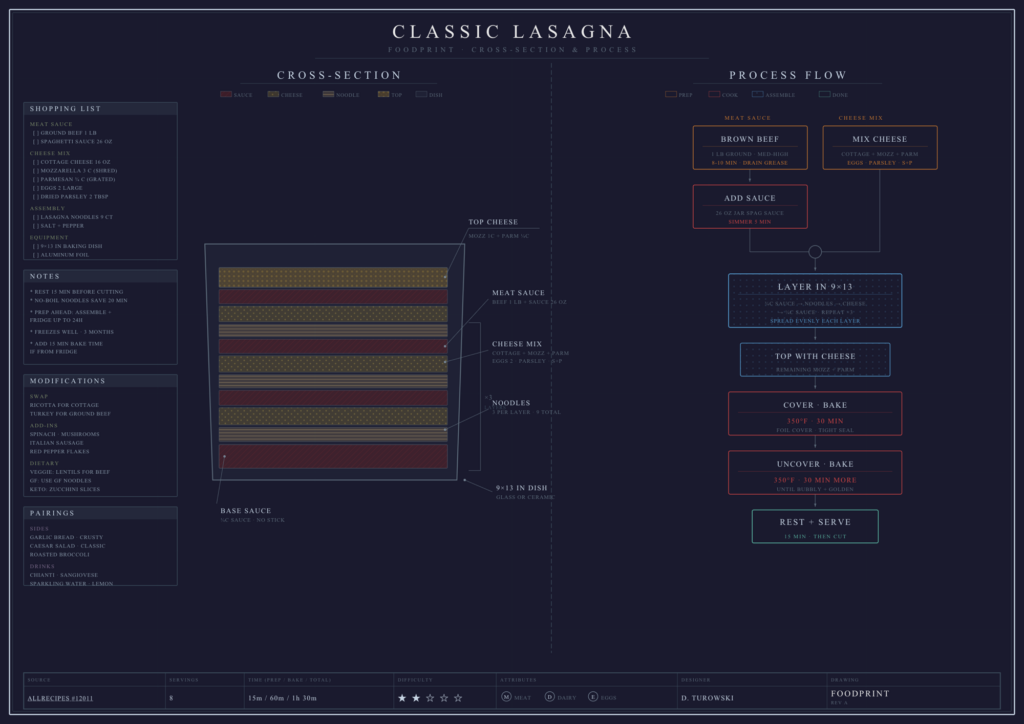
Every Foodprint follows the same layout. Once you’ve read one, you can read any of them. No scrolling past life stories. No ads. No mystery about what “a layer of cheese” means when you can see it drawn to scale with callouts. This format works for my brain in a way that recipe blogs never have: it’s spatial, it’s consistent, and it puts all the information in front of you at once instead of tossing it in a pile of text hidden behind an even bigger wall of text. You can see the whole meal before you start cooking.
And of course, it’s begging to be printed out. A Foodprint on your counter is infinitely superior to squinting at your phone while it auto-locks for the fifth time with wet hands. It’s also, honestly, kind of gorgeous – the kind of thing you’d frame in your kitchen, which is something no recipe blog post has ever made anyone want to do.
Under the hood, this is an AI project. I’m using Claude to take *any* recipe – a URL, pasted text, eventually a screenshot, whatever – and transform it into a structured blueprint. It’s the same thing I keep building: taking information that exists in a bad format and re-encoding it into something that actually respects the person using it. The AI doesn’t write the recipe (although it does a pretty good job now). It redesigns the container.
The part to figure out next: how to make this available to people without subsidizing it or making it the very thing I vowed to destroy: just another ad-ridden recipe site?